Built for the open-plan living and dining wall
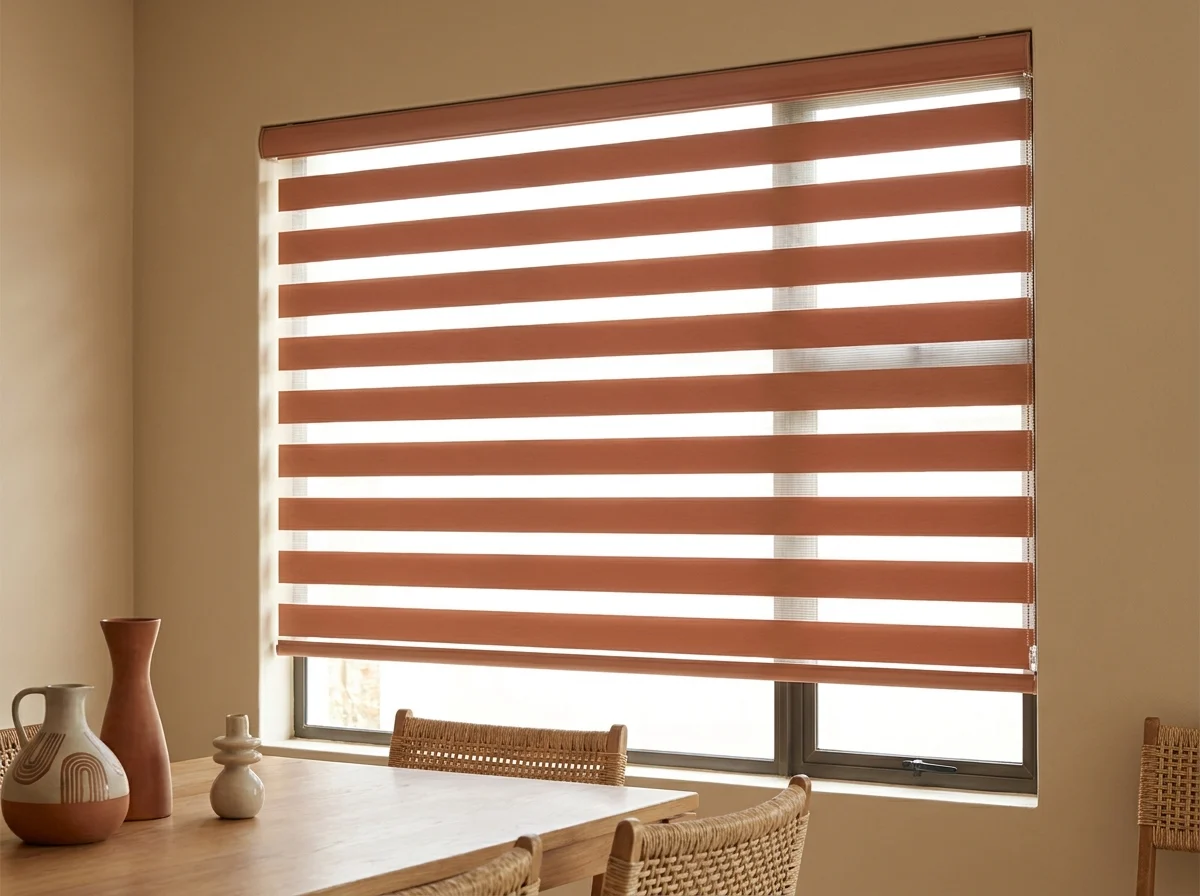
Most Kuils River family homes, whether an established Amandelsig floor plan or a newer estate build, run their living and dining space as one wall of glass rather than separate small windows. A day-night blind tunes that whole wall hour by hour: bands aligned through the afternoon for a filtered, glare-free view over the garden, offset again once the sun drops and the street can otherwise see straight in.
Honest about where it isn't the answer
Even fully offset, a day-night blind isn't true blockout — light still seeps at the band edges, which matters in a bedroom that needs proper dark for a school morning. That's a job for a blockout roller or cellular blind instead. Sheer bands are also more delicate around small hands at reach height than a solid fabric, so we don't recommend day-night blinds as the sole treatment on a low toddler-height window.
Where it earns its place
Living rooms, dining walls, and street-facing windows in the closer-set streets of Zevenwacht and Klein Zevenwacht, where "privacy with the light still on" is exactly the brief an estate's architectural guidelines are usually happiest with. Standard roller hardware underneath means chain or motorised control, cassette options to hide the head rail, and inside or outside mount depending on your reveal.
One product, two moods — the fabric does the work a curtain-plus-blind combination used to need two layers for.
On-site measure, Kuils River- Alternating sheer and solid bands on a continuous loop
- Privacy-with-light for open-plan living and dining walls
- Not true blockout — bedrooms needing full dark want a roller or cellular blind
- Chain or motorised control, cassette head-rail options
Ready to measure your windows?
Free in-home measure, written per-window quote, no obligation.